My Thoughts on Power Rangers: Legacy Wars
This is a mobile game made by the people who would go on to make Power Rangers: Battle for the Grid, and then subsequently piss away any good will they earned by committing to make an NFT game that never actually materialised. I played this game on launch, and it was total ass. This does not reflect the game as it currently exists, but there are a couple of other posts I wrote which rely on this as context.
I don’t normally do the whole mobile game thing. They’re usually massive time sinks and even larger money sinks, almost always without any actual engaging gameplay to back them up.
This was set to change when I found out about a recently released mobile game called Power Rangers: Legacy Wars, a tie-in with the new Power Rangers movie that looks like it’s ashamed to be about the Power Rangers. I had to check this game out for two reasons:
- It’s got Power Rangers in it
- It’s a fighting game
The second part was the one that interested me the most. In a sea of mobile games where the “gameplay” usually consists of stripped-down JRPG interfaces and way too much tutorial text, seeing an attempt at an online PvP-centric fighting game for mobile devices was something that I at least had to try out.
After getting through the first couple of player levels, here’s what I can tell you about the game.
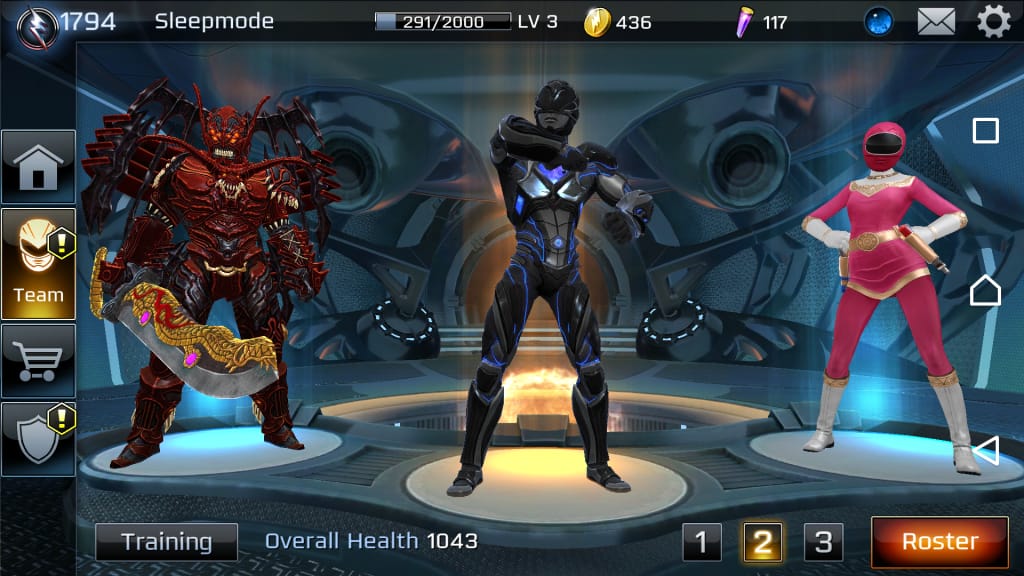
Power Rangers: Legacy Wars is a three-versus-three fighting game, comparable to Marvel vs Capcom — you have one Leader character (the one that does most of the fighting) and two Assists (who jump into the fight to perform attacks occasionally). Life bars are shared by your entire team, with each member contributing different amounts of HP to the life pool.
Playable characters are unlocked via a “loot box” system rather than the typical “gacha” style system. The game’s “Morph Boxes” are earned in a number of ways.
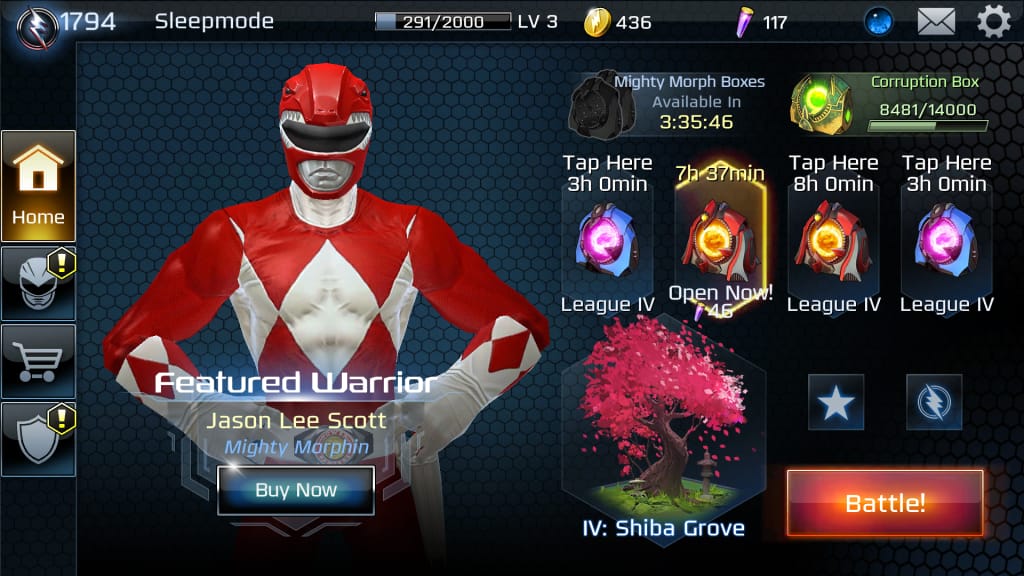
Standard Morph Boxes are earned by winning fights. The Morph Boxes you win range in rarity (and in turn, number of rewards earned from them). These are the main whalebait — as you can see above, each Morph Box takes a different amount of time to unlock, and you can only unlock one at a time unless you pay a number of Crystals (the game’s premium currency) to unlock them immediately. The cost of unlocking a box scales with the amount of time it takes to unlock them normally. Standard boxes a little later in the game take three hours to unlock, with slightly rarer boxes taking eight, and some of the even rarer boxes taking a full twelve hours to unlock. The waiting times are a little ridiculous, but you’ve gotta make your money somehow, I suppose.
Also available are Mighty Morph Boxes and Corruption Boxes. Mighty Morph Boxes are low-rarity boxes the game gives to you for free every four hours, and Corruption Boxes are slightly rarer boxes that open up for unlocking every twenty-four hours. Corruption Boxes require that you deal a certain amount of damage to unlock them, which increases as you progress through the game.
The primary rewards in boxes are Coins (free currency used to upgrade characters), Crystals and Shards, which are the pieces required to unlock characters. Unlocking a character requires ten of that character’s Shards, and bonus Shards earned for that character can be spent on levelling them up, increasing their HP and attack damage.
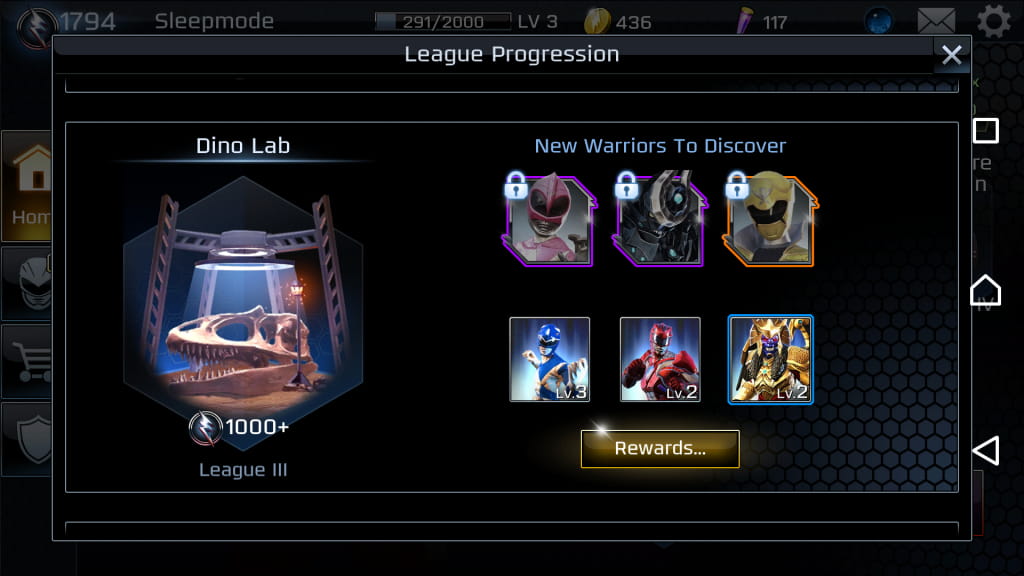
Initially, the character shards that can be earned through boxes are limited. To potentially unlock more characters, you must progress through each PvP league, of which there are five currently. What league you enter is determined by the number of medals you have, which are earned by winning fights. Each new league gives you new characters to discover, and sometimes other rewards, too.
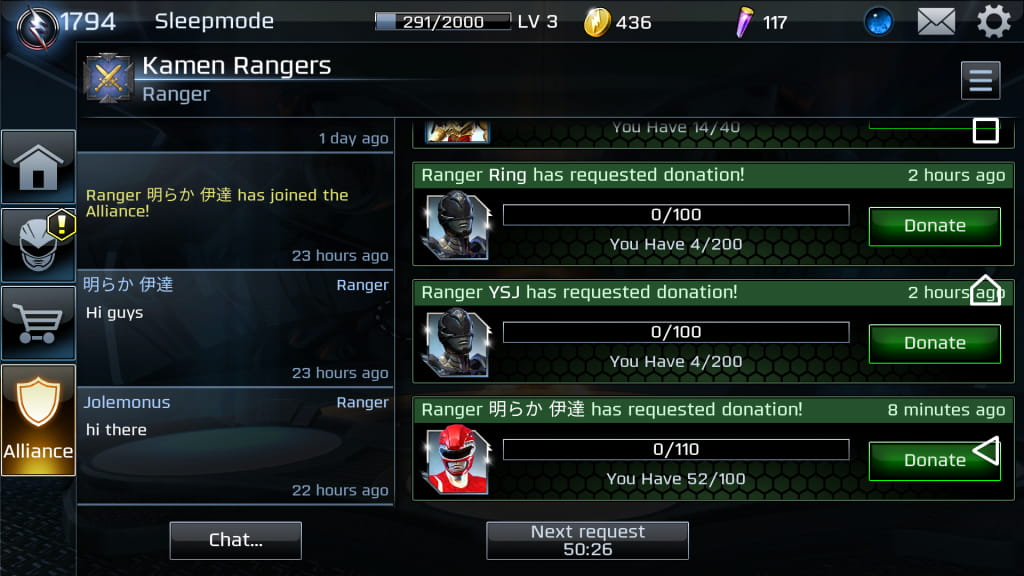
Upon reaching League II, players have the option to join Alliances. The purpose of Alliances is to share Shards between players. Players submit requests for Shard donations for a certain character, and other players may donate that character’s Shards to the requesting player if they so choose. This is a really neat way to give players a bit more control in their character roster management, and is a great alternative to a “marketplace”.
Upon reaching League III, players may also earn Orbs of Eltar, which come in both Leader and Assist varieties as well as three colours — blue, red and yellow. Orbs of Eltar are primarily earned from Corruption Boxes as well as rarer Morph Boxes, and are used to upgrade specific moves in a character’s kit, with each character requiring a different colour orb.
There is a lot of collect-a-thon metagaming going on here, but this is a fighting game, so let’s talk about the actual fighting part!
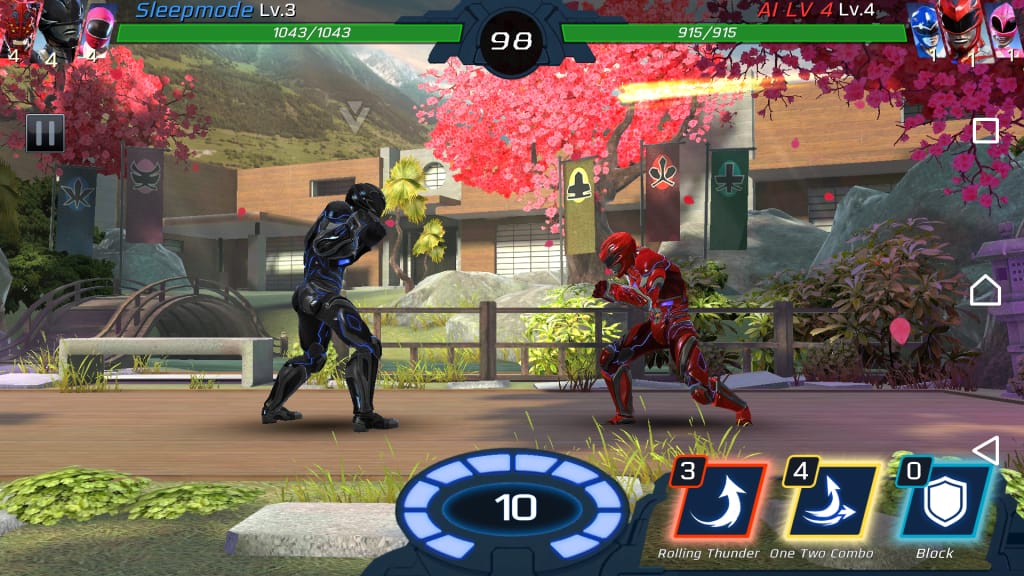
Swiping left or right will make your character move in the corresponding direction by way of a dash. This is the only form of movement — there is no walking, jumping, or anything else. Both dashes, however, are projectile-invulnerable.
In the bottom center is the Power Gauge. Power is used to activate Abilities, which are basically your attacks. This gauge will refill after a short delay when it is below full.
To the right of the Power Gauge is the Ability Deck. All of your attacks, assists and blocks show up here as Ability Cards. Each Ability Card has a different Power cost, and you can only hold three Ability Cards at a time, with a new card being drawn at random whenever one is used.
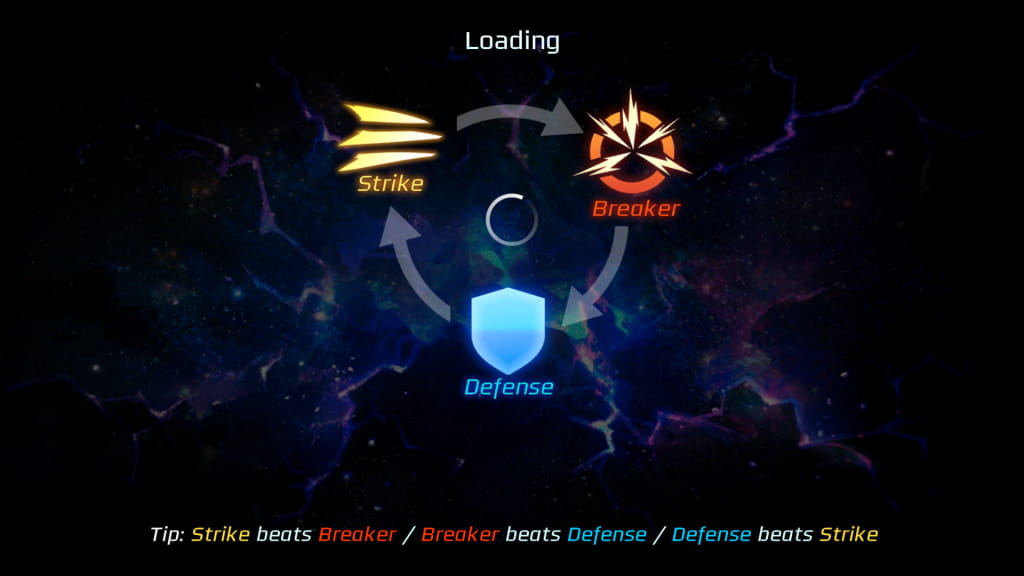
The actual move interactions are defined by the game’s so-called “Ability Triangle” — an RPS structure for the game’s moves.
Strikes are the game’s fastest attacks. They generally do slightly low damage and can be blocked, but their speed allows them to beat out Breakers.
Breakers are big attacks with slow startup. They will lose to Strikes because of their speed, but break through Defensive abilities.
Defensive abilities, such as the universal Block, will be broken by Breakers, but stop Strikes, often allowing you a potential punish opportunity.
Well, that’s how it’s supposed to work, but this game has more than a few issues with regards to move interactions, and that’s what I’d like to talk about.
The first gripe I have with the battle system is that the Ability Triangle isn’t very strict or even consistent with its rules. Strikes are designed to beat Breakers, but only by virtue of the fact that they come out faster, so if you’re too late on a Strike activation, you’re eating a Breaker. You can also have assists dodging pretty much anything you can throw at them because their attack animation involves them jumping high into the air, where you have no hitbox, since assists replace the leader for the duration of the attack. I’ve also had a concerning number of situations pop up where I’ve had a Strike completely whiff on the startup of a Breaker, resulting in me getting hit even though I made the correct decision, although I’m unsure if this is because of hitbox/hurtbox oddities or some side effect of netplay lag.
The above ties in to the fact that the Ability Card system operates like card draws. All of your available non-movement options are basically given to you at random, so you only get to block a Strike or Strike through a Breaker sometimes, if you’re lucky enough to have the card on hand.
On top of that, if you have a Defensive ability card, you can activate that during grounded hitstun. This allows you to block and punish while you’re being hit. This becomes especially bad when some character-specific defensive abilities are taken into account, but suffice it to say, being able to randomly punish someone for daring to win neutral is kind of messed up, and the way this works in particular makes multi-hit grounded combo Abilities basically worthless compared to single-hit knockdowns or launchers.
Also of particular frustration is that after blocking a Strike, you have so much frame advantage that you basically get to land any Breaker for free. There is nothing the opponent can do about this — they can’t block, most Breakers have enough range that they can’t backdash away (and if they’re cornered they’re even more screwed), and because of the frame advantage, there’s not a single Strike in the game that can come out fast enough to beat out the Breaker.
All of the above, combined with the fact that you lose the ability to use or even queue up any cards while in a stagger, airborne or stunned state, means that there are far too many situations where you as a defender have absolutely zero options. And the random nature of your available abilities diminishes any kind of mindgame that the RPS structure is meant to facilitate, and it just comes down to random guesses.
There are also some particularly notable character balance issues.
There are a number of strong assist characters, but by far the best at the moment is Xandred. Xandred is the one of the only Defense-type assists in the game, and by far the most common of them, and he is practically mandatory on every team for a good reason — he is a Defense-type assist that deals damage to the opponent. Xandred’s assist sends out a multi-hitting shockwave that damages and knocks the opponent back. This will straight up lose to Breakers (thankfully), but the attack will initiate regardless of whether or not the opponent is doing anything. On top of this, because it is a Defensive ability, you can activate it while you are being hit by a grounded combo Strike, which helps further render non-single hit launcher/knockdown Strikes absolutely worthless, because Xandred allows you to damage your opponent and create space for daring to make the correct read.
And by far the strongest leader right now is 2017 movie Zack, the Black Power Ranger. Not only is he a very common draw, but he has high HP, high damage attacks, two of which are Breakers, and one of which is a one-hit launcher Strike. In a game full of completely useless ground combos, three of Zack’s four attacks are not only good, but are contenders for best move in the game. Both of Zack’s Breakers have incredibly long reach, do tons of damage and give you enough frame advantage that you can combo them into each other for free. His two Breakers and single-hit launcher Strike give him the strongest and most consistent punishment in the game, which is kind of a big deal when you can block to break combos. Everyone and their dog is playing this character, and in a game where you get to play as one of many different Power Rangers from so many different seasons, seeing this one character dominate every PVP League is really disappointing.
So, what do I think of the game overall?
Everything that hasn’t got to do with the core gameplay is fine. The PVP Leagues are a great way to structure different possible rewards, it’s more than possible to build a variety of teams without having to drop money on the game (though it will require a lot of waiting), and Alliances are a really neat social aspect to the game that I admire.
The core fighting mechanics technically have a strong base (as most fighting games with RPS move interactions generally do), but Power Rangers: Legacy Wars suffers from poorly-implemented systems and horrendous character balance as a result. The lack of consistency in available options massively detracts from the mindgame that is meant to be at the core of a fighting game, and the way all of the defensive and offensive mechanics interact make the game about creating teams that exploit that inherent brokenness in ways that make the game immensely frustrating to play at times.
I think this game has potential, but it would practically need a complete overhaul of its combat mechanics in order to reach that potential.