Note (01/03/2026)
You should play video games with your friends. That goes for this one, too. I still think that if you have friends who are interested and the patience to trudge through arcade game setup, then you’ll get a lot out of EXVS2. But if your friends are on Starward? You really can do a hell of a lot worse.
So… we all like Gundam Extreme Versus, right?
Sure we do. Bandai Namco’s flagship video game series based on the cultural behemoth that is Mobile Suit Gundam is an enduringly popular game among mecha fans and fighting game players alike. In Japan, it is frequently cited as one of the most popular arcade games in the country; you can still find frequent streams for the game coming from places like Game Center Okinaya, as well as no shortage of officially-sanctioned competition, with events like Extreme Encore, Gundam Game Grand Prix and Premium Dogfight being huge parts of the game’s community landscape.
Outside of Japan, it has a solid place in the smaller community events at major tournaments in the US like Climax of Night and, most recently, Frosty Faustings. And the game has certainly earned its cult following, because it’s really cool! Even if you’re not a huge fan of the source material,1 the game is shockingly approachable while still containing immense depth and complexity, with each game being a frenetic dance of fast and open-ended movement, multi-faceted resource management and carefully splitting your attention between the enemy in front of you and the enemy currently trying to gun down your partner.
But if you bothered to trawl through that match footage I’ve linked, you’ll have noticed a disparity. In Japan, the game being played is Mobile Suit Gundam Extreme Versus 2: Infinite Boost, the third (and presently most recent) iteration of EXVS 2; the base version of the game released to arcades in October 2018, with the intermediate revisions XBoost and OverBoost releasing in March 2021 and June 2023, respectively (Infinite Boost itself launched in July 2025).
In the US, the game being played is Mobile Suit Gundam Extreme Versus: Maxi Boost ON, the fourth and final iteration of the first EXVS game. MBON, as it is called, released globally exclusively on the PlayStation 4 in July 2020 - not only two years after the arcade release of EXVS 2 and a year before the release of XBoost, but importantly, four years after the arcade release of MBON, which first launched in March 2016. Before that, the last time console players got to play EXVS was with the release of Gundam Versus on the PS4 in September 2017, and the last time console players got to play a game they actually liked2 was with EXVS Full Boost on the PlayStation 3 in January 2014, two years after its April 2012 arcade release. That six-year gap between Full Boost and MBON also saw console players miss out on the original EXVS Maxi Boost, which stayed arcade-exclusive. To date, outside of these console ports, there have been no attempts by Bandai Namco to bring the game to players outside Japan, meaning fans of the series in the west have spent the better part of a decade basically being shit out of luck if they want to actually play the game, since the company that publishes it seemingly has no interest in expanding its audience. To date, the only attempt at even translating the game for PC was with Rise of Incarnates, which crashed and burned before it even got out of beta testing.3
The prevailing wisdom (which is largely conjectural) is that Bandai Namco’s arcade division is effectively reliant on the outsized popularity of EXVS in Japan, as well as Wangan Midnight Maximum Tune and Taiko no Tatsujin globally, to generate the revenue that justifies its continued existence. But at least I can go to any arcade here in Australia and probably find a Taiko cabinet, or almost certainly find a set of four WMMT cabinets. I’m fucked if I want to play an even remotely up-to-date version EXVS.
Enter Starward, a Chinese gacha game for PC and mobile devices which aims to be the game you can play instead of EXVS. Where your (legally above-board) options for Bandai Namco’s offering are a six year old port of a ten year old game which requires a PS+ subscription to play online4 or spending 200 yen per credit in a Japanese arcade, we somehow live in the version of the future where the fucking gacha game is a better value proposition than the others. I don’t think any of us hate Bandai Namco as much as we should.
They say to never attribute to malice that which can be explained by incompetence, but I think we can make an exception for Bandai Namco, a company which appears to be both malicious and incompetent in equal measure. It’s really less of a media company and more of a media dragon, sitting on a vast hoard of cultural wealth with zero inclination to do anything other than keep it warm and away from everyone else. While Cygames turns its bucketloads of gacha game money into massive multimedia projects and weird art like “what if the giant robot was gay for his pilot,” and even fucking Bushiroad actually tries to do things like keep Cardfight Vanguard chugging along or get 8ing to make a fighting game on a budget of some pocket lint and a ham sandwich, Bandai Namco continues to allow some of the most important contributions to video games as a medium languish in the pile under its ass. We haven’t had a real Ridge Racer game since the PS Vita!! And now I have to spin the wheel for fucking system mechanics because they won’t let me play what is arguably their most popular fighting game!!
Oh, right, Starward. So I can’t independently verify this, but apparently the game was a project by a Chinese university student who really wanted to play EXVS, but with no official way to do so, took the route of saying, “Fuck it, I’m gonna make my own EXVS with blackjack and hookers.” I’m not sure the “blackjack and hookers” part was meant to be so literal, but when Game Blender’s finished product was picked up by publisher Shengtian Games, it got given the digital casino treatment before it was thrown onto mobile systems and PC. This means that Starward is, above all else, kind of fucking weird to talk about, because I now have to reconcile my utter hatred for the gacha game format with the fact that this particular gacha game, minus its various currencies and progression systems, is an incredibly functional and shockingly faithful recreation of everything people love about EXVS that still manages to have a few of its own original ideas. It is, in all ways, the game that we play specifically because we can’t play EXVS, but given its concurrent player counts are now beginning to eclipse that of even Guilty Gear Strive, it’s clear that people are playing it all the same, and I have to concede that I really do understand why.
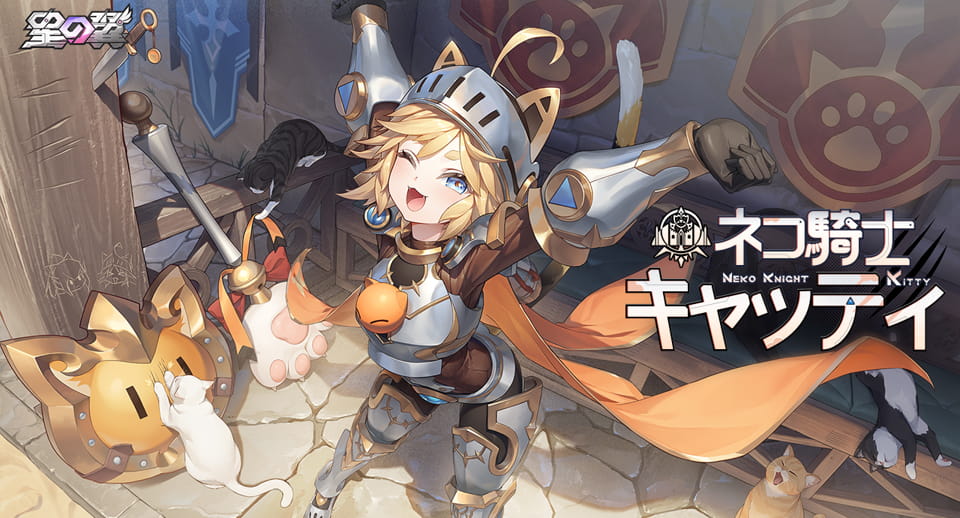
But, like, at least for me, it’s impossible to talk about Starward without talking about the arguably disastrous effect that MiHoYo has had on the gaming landscape, and how that landscape helped to create Starward as it currently exists. I felt the spectre of MiHoYo’s outsized influence looming large over me as I booted into the game and was met by a wide assortment of painfully generic and uninspired anime girl character designs, like they were pulled together from leftover parts used to make Honkai Impact characters. We’re firmly in the “waifuslop” postcode of gacha country, and yet there doesn’t seem to be a whole lot in the way of characters that I might find particularly attractive or otherwise form any kind of emotional attachment to. In the end, my primary rubric for assessing which characters I wanted to play was how much they looked like a robot5 - a rubric I adopted because of just how many characters in this game are not only not robots, but also barely seem to match the sci-fi setting. Gundam overall is very much a space opera franchise, with all of its characters very much human. Starward seems to be more of a mishmash of various sci-fi and high fantasy concepts, with robot girls and other flavours of cybernetically-enhanced girl somehow existing alongside magicians, elves, traditional Chinese martial artists and… a tiny catgirl knight, I guess.
There are robot girls launching nukes in this game, what are you doing here
There’s barely any visual cohesion to the character designs, with the only real unifying theme appearing to be “Woman”; the cast is otherwise a jumbled katamari of various character design tropes common to the modern gacha game seemingly assigned at random.
And yet, annoyingly, this complete lack of design cohesion kind of works in the game’s favour. Despite its competitive credentials, Gundam EXVS is also unbridled Gundam fanservice; part of that fanservice is the games looking to represent as many different individual mechs and pilots as possible, which leads to the games having literally hundreds of individual playable characters across all four cost brackets.6 This is all fine and dandy if you’re a fan of the anime, because the games kind of expect you to just pick your favourite suit from your favourite season of the show and be on your merry way. But if you’re not a seasoned fan of the show, chances are you’re not going to have a single clue what any of the game’s characters do, and you certainly won’t be able to tell at a glance, especially since all the Gundams kinda look extremely similar if you’re not familiar with the series’ visual design language. Not only does Starward have significantly less characters (at time of writing, there are 64 characters across all four cost brackets), but the fact that the themes for each character design vary so wildly means you can more easily identify what a character might be about just by looking at them, and decide which character you want to play accordingly.
Even more annoyingly, the fact that characters are meted out via the gacha also helps to ease new players into the game; even if we’re not in the literal hundreds of playable characters present in the newest EXVS, 64 is still a pretty large number of characters to choose from, and while the primary goal of any gacha is to put players in a position where their access to vital game pieces is largely left up to chance, a subtle but substantial benefit to the character gacha is that the game more or less decides what characters you get to play. Your roster will expand as you spin the wheel more, but starting out, I found that effectively having to decide who I wanted to play from a random pool of six characters rather than the full roster of 64 meant choice paralysis just didn’t become a factor for me - something which has pretty significantly hindered my descent into EXVS proper in the past.
The gacha itself is also damn near infuriating in how not completely evil it is. Like, it’s still kind of evil, but it could have been so much worse.
Up top, I referenced having to spin the wheel for system mechanics. This is technically true, but also somehow not as bad as it sounds. Star Burst is Starward’s analogue to the EX Burst mechanic in EXVS, allowing you to spend a meter built up over the course of a match to activate a powered up state that performs different functions depending on what flavour of Burst you’ve chosen. For MBON and EXVS2 Infinite Boost, there are three: Fighting (which boosts melee prowess), Shooting (which boosts ranged firepower) and Extend (which boosts defensive capability). Starward has six burst types: Fighting, Shooting, Survival (analogous to Extend), Mobility (boosts movement speed and efficiency), Support (provides buffs to your partner) and Balanced, which provides small boosts to everything rather than specialising in any one field.7 Every character has Balanced burst available to them by default, but additional burst types are contingent upon items called “Burst Cores”, with each burst core being both type and character specific, ie unlocking the Fighting burst core for Beta does not unlock the same core for Deucalion and vice versa. Burst Cores can be earned by rolling for them in the gacha. They are also extremely common items to get from the gacha, and you can also just buy them outright within the core selection menu with a currency that the game throws at you hand over fist, at least at the beginning.
The most gacha-esque feature of the game is its “Talent” system; each character has a total of five talent tiers which grant access to new abilities and the like as each talent is unlocked. Talent tiers are unlocked with either duplicate copies of characters or with “Talent Essences” which can be purchased from the in-game shop. What I would normally expect to be a site of extreme grinding or otherwise railroading players into throwing money at the slot machine is somehow only moderately annoying - any other game would progressively increase the number of essences/duplicate characters required to unlock subsequent talent tiers, but Starward keeps it at a flat one item per talent tier. However, because it’s generally more efficient to roll for character dupes rather than buy Talent Essences - especially since there are two tiers of Talent Essence corresponding to one of the two character rarities - this is where the majority of the actual grind takes place, more or less confirming my suspicion: if a gacha game is generally described by its players as “generous”, what that usually means is that the game is more interested in getting you to invest your time. After all, you can get everything you need for free if you work hard enough for it, but just so you know, the ability to skip all of that work is just a few dollars away. The least fun parts of the game are the parts where I’m converting my various resources into tickets to spend on the gacha, and with those resources being earned by various daily and weekly events as well as the requisite battle pass that all multiplayer games are apparently required by law to have, it creates a kind of player incentive structure that just feels backwards to me, because the rewards you get for playing the game almost feel more important than the act of playing the game itself.
Unfortunately, playing the game is also really fun on its own terms. EXVS At Home is still a hell of a lot like EXVS, and the fact that the game is so well-tuned to provide such a similar experience while still being meaninfully different in a few large and small ways does a lot to soften the blows incurred by the periods of time where I feel like I’m doing accounting rather than playing a fighting game. On a larger scale, Starward provides both 2v2 and 1v1 gameplay options, but with slightly more metagaming involved. In both formats, players take a team of four characters into the matchmaking queue, and upon finding a match, each team then bans two characters from the opposing team’s roster for 2v2, or each player bans one character in 1v1. 2v2 is played in the standard format from here, but 1v1 is played in a 3 on 3 tag team format (?!), with the first player to lose all three characters losing the match.
As far as the actual game is concerned, Starward feels, in some ways, a little more aggressive than EXVS thanks to more expansive movement cancels (most attacks can be cancelled with step or jump rather than just boost dash) and overall boost capacity generally being a bit higher, giving characters more opportunity to move around and mix up their landings. This is presumably to somewhat make up for the game having overall less attacks than EXVS, with Starward lacking EXVS’ more expansive melee strings as well as A+C special shots, with characters instead only having their main shots (A), melee attack (B), sub shot (A+B) and special melee (B+C). This, plus a number of other ease-of-use features like step and dash shortcuts as well as a dedicated guard button all stem from the game being designed for mobile phones as well as PC. That said, the game is more than willing to accommodate you if you want to play using the standard EXVS arcade control scheme, and it works about as well as you could hope. The game also has a pretty decent selection of single player options as well, with tutorials for both game systems and individual characters, various missions in its arcade mode, trial battles and even a fully fleshed out training mode that lets you try out characters you don’t own.
Unfortunately, there is one significant black mark against the actual “playing the video game” part of Starward, and that is the fact that the game, for whatever reason, will outright refuse to match you up with actual human players, irrespective of matchmaking server, until you hit 6000 points in the game’s ranking system. I don’t know if this is some kind of player retention measure or if it’s just that hard to find games otherwise, but this feels especially egregious in light of the fact that Starward already has a whole host of single player options, because it makes the act of playing the game feel like more of a grind than it should be. When I finished my three placement matches, I was placed into the “Planet II” rank, which is worth around 2500 rank points. However long I have to play in order to earn the right to play against other humans feels a little too long to me, because fighting with and against bots is hardly representative of what an actual thoughtful match of any fighting game would be - especially frustrating because it’s hard to know if I’m actually learning anything that would be of any use to me once I get to fight other players. From where I’m standing, 4000 points sure seems like a long time to build up some bad habits, especially against enemies that frequently just stand still for no discernible reason.
I dunno. Starward is a lot of things I like and a lot of things I could really do without. There are undoubtedly good reasons to play it: for one, you can actually just download it and start playing. There are ample resources for learning the game, and while it is undoubtedly no real replacement for EXVS, at least someone is trying to fill the black hole left by Bandai Namco’s contempt for its audience - and honestly doing a pretty decent job of it, to boot. It’s probably more worth playing than not at all, especially if you’re curious about this kind of game and want a low-commitment way to figure out the basics of the gameplay, but it’s hard for me to know exactly how much time I’ll spend with it. I like the actual game and my characer toolkits of choice, and I will certainly play Starward with my friends who also play the game, but if you, like me, have a regular group of friends who are also interested in learning the game, I honestly find it hard to recommend Starward over going through the extra bit of work to set up EXVS 2 via Radmin VPN.8 But I also can’t not recommend Starward at all - as much as I find myself wanting to reject the patronisation of the digital casino and the isolating convenience of the matchmaking queue, it is at least a game whose creators actually want you to play it. I think you can do better than Starward, but in the grand scheme of things, you can sure do a hell of a lot worse.
-
I played the original Extreme Versus on the PlayStation 3 well before I watched my first ever Gundam anime, thus continuing my long-standing tradition of engaging with popular media franchises via fighting game adaptations before the source material. ↩︎
-
Gundam Versus was something of a compromise on Bandai Namco’s part, being a game that was similar enough to EXVS that people would play it without having it cut into the arcade market share of EXVS. Unfortunately, that also meant a bunch of system changes that completely gutted how the game’s neutral worked, and as a result it was never that popular. Ask your nearest Gundam oldhead about Boost Dive to get a more thorough rundown. ↩︎
-
And the game will very aggressively remind you of that, shoving a list of available PS+ subscription packages every time you enter the main menu if you don’t have a sub. ↩︎
-
If this is my substitute for the giant robots game, then I’d better get some damn robots! ↩︎
-
Basically, characters in EXVS (and Starward, by extension) have “cost” values attached to them; higher cost value characters usually have better HP/movement/damage output etc, but subtract more from the team’s shared life pool when they die. ↩︎
-
This actually brings Starward’s burst choices more closely in line with EXVS2 XBoost, which had Fighting, Shooting, Mobility, Raging (defensive burst which replaced Extend) and Covering burst types. ↩︎
-
nyaa :3 ↩︎